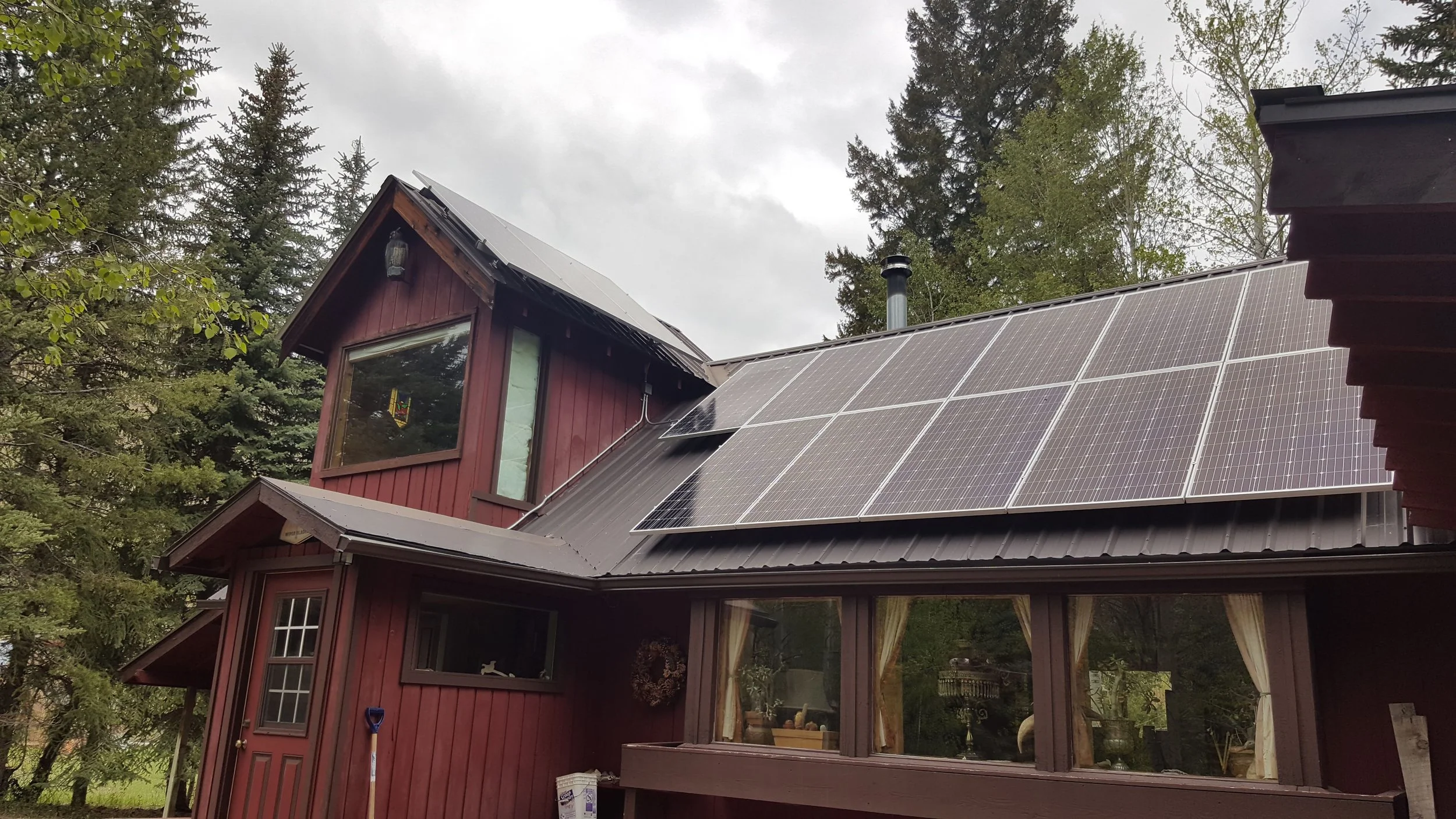
You Have Solar Panels. So Why Will Your House Go Dark in the Next Power Outage?
Grid-tied solar shuts off when Pacific Power goes down, even on a sunny day. Adding a battery to your existing system keeps your fridge, furnace, and well pump running, and lets your panels recharge it.
Tesla & FranklinWH Certified · NABCEP Certified · Oregon CCB# 259590 · BBB Accredited · Locally Owned in Talent
Here's what most solar owners find out the hard way.
It's a January evening. Wet snow and ice have been weighing on the lines all afternoon. The lights flicker twice, and the house goes quiet.
You'd expect the homes without solar to go dark. What surprises people is that the house with solar goes dark right along with them.
The fridge stops. The furnace stops too, gas furnaces included, because the blower and igniter run on electricity. If you're on a well, the water stops. And nobody can say whether it's three hours or three days. In February 2025, some homes around Eagle Point were out for more than a full day.
Meanwhile, your panels sit on the roof doing nothing.
It's not a defect, and it's not your installer's fault.
Every grid-tied solar system is built to switch off the moment the grid goes down. It's called anti-islanding, and it protects the Pacific Power crews repairing the lines. If your panels kept sending power to the grid, a line worker could get hurt.
What most homeowners were never told is what that means for them: solar without a battery gives you no backup power. Not in a winter storm, not in a fire-season shutoff, not at noon on a cloudless day. And fire-season shutoffs usually come on hot, dry, windy, clear days. Perfect solar weather, and your house is still dark.
✔ Not sure if you already have a battery? Look for a large wall-mounted cabinet near your electrical panel or in your garage, that could be labeled Tesla, FranklinWH, Enphase, LG, or battery / battery disconnect with a red warning label. If you don't see one, your solar almost certainly shuts off in an outage.
What changes when you add a battery
Dinner gets finished. The lights stay on and the stove keeps working.
The house stays warm. The furnace fan keeps moving heat through the night.
The water keeps running. Your well pump keeps pumping.
The freezer stays frozen. Your meat, veggies, and perishables stay safe.
Medical equipment keeps running. A CPAP or oxygen concentrator doesn't skip a beat.
Nobody drags a generator out into inclement weather at 10 p.m. And nobody listens to one drone all night.
➜ And your solar finally pulls its weight. During a long outage, your panels recharge the battery during the day, and the battery carries your home through the night. Homes with a battery and no solar can't do that.
How it works, in plain English
We install a battery and a smart gateway next to your electrical panel. The gateway watches the grid around the clock.
When Pacific Power drops, it switches your home over in a fraction of a second. It safely disconnects you from the grid, so you're protected and so are the line crews.
Your panels charge the battery, and the battery powers your home. When the grid comes back, everything reconnects on its own.
You don't flip a switch or pull a cord. Most families don't notice anything happened until they look outside and see the rest of the street dark.
A few questions you might be asking:
"Can my system even take a battery?"
Most can. Modern batteries can be added alongside your existing inverter, a setup called AC coupling, so in most cases your panels and inverter stay exactly as they are. We're certified on Tesla Powerwall, FranklinWH, Enphase, SolarEdge, and EcoFlow storage, which lets us match the battery to the system you already have instead of forcing one brand on you. We confirm compatibility during your free check.
"What size battery do I need?"
It depends on what you want to keep running. A single battery comfortably covers the essentials: fridge, freezer, lights, internet, a gas furnace blower, and a well pump. Whole-home backup, including electric heat or central air, could take two or three. Well pumps need a battery that can handle their startup surge, and how you heat your home matters more than anything else. We'll add up your real loads so you buy the right size, not the biggest one.
"Will it still help in winter, when the sun is weak?"
Yes, with honest expectations. On short, gray winter days your panels put back less, so the battery is doing most of the work, and we size it with our winters in mind. In fire season, with long sunny days, a solar-and-battery home can keep itself going day after day.
"Do I need a new electrical panel?"
Sometimes. Some older panels don't have room for the battery connection or need to be upgraded to newer electrical codes. We check yours during the visit, and if it needs work, it's spelled out in your written quote before you decide anything.
"What does it cost?"
Straight answer: adding a single battery to an existing solar system typically runs about $11,500 to $16,500 installed, depending on the battery and your electrical panel. The 30% federal tax credit ended in 2025, and I won't pretend otherwise.
Two things help. Pacific Power's Wattsmart Battery Program pays homeowners to enroll a qualifying battery, with a rebate after the installation and bill credits over time. We'll check whether you qualify and how it fits with your current net metering and rate plan, so there are no surprises. And because we're a small local company with low overhead, there are no commissioned salespeople and no dealer fees hidden in your price. You get a written, itemized quote you can compare with anyone's.
"Is a lithium battery safe in my garage?"
Yes, when the equipment and the installation are done right. The batteries we install use lithium iron phosphate (LFP), the most heat-stable lithium chemistry used in homes. Each one has a built-in management system that monitors every cell, the systems are certified to the UL 9540 safety standard, and we install them with the clearances and placement the fire code requires.
"The company that installed my solar is gone."
You're not alone. More than 100 solar companies have closed in recent years. We add batteries to systems we didn't install, and your panel manufacturer's warranty usually still stands.
"Can I add more panels at the same time?"
Often, yes. If you've added an EV or a heat pump since you went solar, this is a good time to look at it. We'll check whether your inverter has room to grow, and if not, we can add a second inverter or use a battery with a built in inverter like the Tesla Powerwall.
"My system is leased."
If another company owns your system through a lease or power purchase agreement, adding a battery has to go through them. Call anyway. We'll look at your agreement and tell you honestly what's possible.
About Concentric Solar
From the Owner
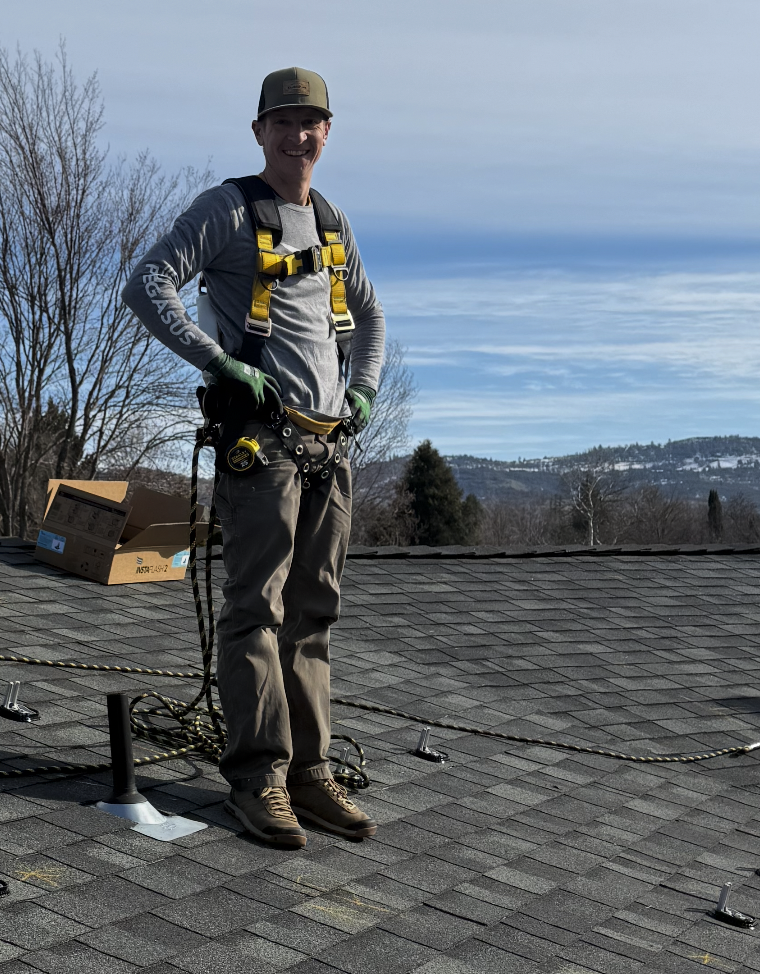
I spent more than twelve years in solar, most recently directing operations for a national-scale company. In 2025 it went bankrupt and laid everyone off right before Christmas. I started Concentric Solar to do the opposite: local, honest, and still here years later.
I'm on every job. I do the design, I oversee the work, and I'm there in person for installs and service calls. When you call, you'll know exactly who's accountable.
The Credentials Behind the Work, and What They Mean for You
NABCEP PV Installation Professional
The solar industry’s most respected installer certification. It takes documented field experience and a rigorous exam.
Oregon Limited Renewable Technician license
Licensed by the state for the electrical work on solar and renewable energy systems. We don’t just sell it, we’re licensed to wire it.
PMI-CP (Project Management Institute)
A professional project management credential. Your project has a plan and a schedule, and you know what’s happening at each step.
Idaho Electrical Specialty License
Additional electrical licensing beyond Oregon.
Oregon CCB# 259590
A licensed, bonded, and insured Oregon contractor. You can look us up on the CCB website.
BBB Accredited
Held to the Better Business Bureau’s standards for honest business.
Certified installer: Tesla Powerwall, FranklinWH, Enphase, SolarEdge, EcoFlow
Trained and approved by the manufacturers, so your warranty is protected and the work is done to their standards.
Here’s exactly what you get with a free Solar Backup Check
We'll come out, look at your system, and give you straight answers to five questions:
What exactly happens to your home when the grid goes down today?
Can your system accept a battery, and which one fits it best?
What do you actually need to keep running? Fridge, furnace, well pump, medical equipment, or the whole house.
Do you qualify for Pacific Power's Wattsmart Battery Program? what would it pay you, and how does it fit with your net metering?
What would it cost? In writing, itemized, with a realistic timeline for your project.
What it costs you: About an hour. Nothing else. You keep the written plan whether you work with us or not.
What happens next
Fill out the short form below, or call (541) 414-6278.
We get back to you within 24 to 48 hours to set a time.
We visit, look at your system, and hand you the answers and the quote.
A note on timing. A battery install needs permits and Pacific Power paperwork, and that takes weeks. The families who call after the power goes out usually wait until the next outage has come and gone. If you want this winter's storms to be a non-event, now is the time to book the check.
Get Your Free Solar Backup Check
Free · No pressure · Response within 24 to 48 hours · Or call (541) 414-6278
P.S. If you remember one thing from this page: solar panels without a battery shut off when the grid does, even on the sunniest day. A battery fixes that, usually without touching the panels and inverter you already own. Book your free Solar Backup Check above, and you'll get straight answers and a written quote before winter storms arrive.